It has been a while since I have turned to my planned series of posts on Uncut's Sounds of the New West CD, but here I am again finally, on to track 2, The Flying Burrito Brothers and 'Sin city'. Of course there had to be a Gram Parsons song on here somewhere, as he is widely accepted as patient zero, the founding father of the whole alt-country movement. Parsons, who was born into a very wealthy family and hance could afford never to have to worry about real work, became the original cliche; he lived fast, died young, and left a good looking corpse, albeit briefly, before it was turned into a pile of ash under a soon-to-be-famous desert tree.
Parsons expired on 17 September 1973 in a seedy motel after a cocktail of drugs (morphine) and alcohol (tequila), with ice cubes shoved where one doesn't normally shove ice cubes, as his friend tried desperately to revive him. In a great twist to the tale which you could hardly make up, his corpse was later stolen by his manager (as agreed with Parsons - what were they on when they came up with that plan?) and burned shortly after under a soon to be famous Joshua tree in the desert(Wikipedia article on Parsons is here while a homepage about him is here). Yes, that is a Joshua tree behind U2 there on the left; perhaps the reason they look so serious is that they can't find the actual spot where Parsons was burned but are sure they can smell something.
Having heard a lot about Parsons and his influence (mainly from Uncut, of course) I was somewhat bemused to hear, on finally buying a budget-priced set of his two albums, what sounded a lot more traditional old-style country than I had anticipated; I was not sure what to expect, but somehow John Lydon in a cowboy hat was in my mind. Several of the songs, like 'The new soft shoe' and 'Kiss the children' were almost, to my ears, stereotypical soft weepy country stuff. His first solo album 'GP' remains definetely a bit too soft for me, but his second, 'Grevous angel', has grown on me a lot more, including as it does far more contemporary-sounding songs like the title track, 'Love hurts', and 'In my hour of darkness'. Before these solo albums, Parsons recorded with the aforementioned Flying Burrito Brothers, the Byrds and others, which I have yet to explore in any real way.
Of course, perhaps one of his greatest gifts was the discovery of a young singer called Emmylou Harris, and the discovery that she was a hell of a lady to share a duet with (for example on 'Love hurts' and 'Hearts on fire'), but we will get to her very shortly (at least that's the idea) in this series. Some incredibly old footage, possibly taken by John Logie Baird himself, of Parsons and Harris together can be seen below:
Overall, I have concluded that his music just takes some time to work its way into your head but, when it does, his influence and originality become all to apparent. In fact, perhaps what really made him click for me was hearing others (including people like Wilco and Whiskeytown, who were always going to be able to draw me in and make the appropriate polite introuctions, like old friends urging me to give the kid another chance) cover his work in more contemporary style (as on the covers compilation, Return of the Grevious Angel, seen below), helping to bring his songs to life in a more familiar way, but respectfully showcasing the excellence of his lyrics and songwriting. A great duet of Emylou Harris and Ryan Adams on 'Return of the grevious angel' can be found here.
Songs like '$1000 wedding' now seem like the story of a great movie waiting to be made There was a $1000 wedding, Supposed to be held the other day But with all the invitations sent The young bride went away The groom saw people passing notes Not unusual, you might say But where are the flowers for my baby I'd even like to see her mean old mama And why ain't there a funeral, if you're gonna act that way I hate to tell you how he acted When the news arrived He took some friends out drinking And it's lucky they survived.....
This is high-grade gritty drama, far from old style country music. As a final clip, the footage below shows Evan Dando (who always strikes me as a fitting seeming heir to Parsons) playing this song:
I have not given up on Gram yet, even if he may have given up on me, and I have no doubt that his swaggering ghost haunts much music that I love, for which his debt to my musical wellbeing cannot be overstated, and might never be adequately repaid.
In the last three years, like many others, I estimate that my CD buying activity has reduced by 90%, in terms of number of albums purchased, or even more in terms of money spent. I download the vast majority of my music from iTunes, or as part of a subscription for eMusic, which happens to have much of my type of music. So far this year, I have purchased U2's 'No line on the Horizon' (because of a sort of tradition, because it looked nice, and because they threw in a poster I am around 25 years too old to put on my wall, plus access to a film I am unlikely to ever watch - yes, marketing guys, I am that stupid), Leonard Cohen's 'Live in London' (also looked kind of cool and was an impulse purchase in hard copy, as it were) and Grant Lee Buffalo's compilation 'Storm Hymnal' (simply because I couldn't find it to download anywhere, and because one evening I took a sudden hankering after a few songs - especially 'Mockingbird' and 'Happiness' - from 'Mighty Joe Moon' which I hadn't even thought of, let alone listened to, for 15 years.
Anyway, my point in this post is that record companies have an easy way to make me buy more CDs, and that is to combine good recession-proof value with extra qualities that simply can't be downloaded. The best case of this I have probably ever seen is the new edition of Radiohead's 'The bends'. This comes in a small CD-sized card box, which contains
- the Bends CD (original, not remastered I think) - the original CD booklet - a CD with 21 B-sides and acoustic and BBC session versions of some of the songs on the CD - a 90-minute DVD with several live performances (including Top of the Pops - bet they didn't get invited back after 'Kid A'!) plus original videos for the singles - 5 postcards with the single covers, which look really nice, although I have no idea what to do with them (maybe keep them for my wall along with my U2 poster if I suddenly start living backwards, like Brad Pitt in 'Benjamin Button')
And it was €16.99! That is savage value, and enough for me to buy the whole package despite not being that big a Radiohead fan, although I always had a soft spot for 'The Bends' (especialy the title track, 'Black star' and 'Sulk'). There is a great video for 'Sulk' here:
and a nice live version of 'Black star' at:
They lost me a bit with with 'OK Computer' (except the wonderful 'No surprises') and then evaded me forever more when they disappeared up their own backsides with subsequent albums, which I really don't think anyone could possibly describe themselves as having a soft spot for (except perhaps Cylons? - just catching up with the fuss about Battlestar Galactica!).
Bacically, I was impressed by this package and this value, and if there were more like it out there, I would certainly buy them.
A while ago, I started to draft a post on the importance of melancholy music in my life. I have always been a fan of music that others would describe as unacceptably sad or morose, and make no apologies for the fact. Music has helped me through some hard times of real (or often imagined) existential melodramatic self-pity and angst.
Since then, I have had cause to return to music for comfort due to personal loss, and have gone through something which I am not going to write about here, but which made me think even more about how important music with a certain mood was in the darker moments of my life. While the music I turned to first in recent days revolved around a core of 'The songs of Leonard Cohen', 'The Boatman's Call', and (predictably) 'Boxer', for now I am going to stick to my original idea, which was to talk about the music which I listened to in times of adolescent micro-dispair over long-forgotten girls or crises, so trivial in grown-up retrospect, and come back later to talk about more recent emotional comfort blankets like the above, as well as American Music Club, Tindersticks and others.
So, back in time for now. Coming of age socially and musically in the early 1980s and being of a certain taste and midset predictably turned my head towards Joy Division, of course, and songs like the magnificent 'Shadowplay', probably my favourite of their songs:
It is simply impossible to know whether we would still hear the same agony and dispair in Ian Curtis' voice and see it etched on his face if he had lived to grow old like his bandmates. As it is, to me it sounds like a moan from a pit of hell, like a man clinging on to everything with his fingernails, like it seems he really was. There is no doubt in my mind that every second of every Joy Division song is the real thing, not just put-on angst by intense young men of more recent years who can make the sound but never match the mood, who will never convince you that their demons are crawling behind their skin, looking through their eyeballs, and playing their larynx like their own guitar. However, despite the dispair, Joy Division for me would not necessarily conjure the word 'sad', more 'angry' or 'dispairing', and would not quite hit the tone I needed in the dark blue moments of which I speak.
For that, I really think you need The Cure. Not the happy, bouncy, poppy Cure of late 80s/early 90s, and definitely not the loud grungy Cure of the last decade, or even the scarily psychotic Cure of 'Pornography', but the young early 1980s Cure, when they had just discovered drugs and alcohol and synthesisers. This is when they made the sepulchral mausoleum of sound that is 'Faith', which contains songs like 'The Funeral party', to me one of the saddest pieces of music I have ever heard, with the drums and huge synths building a rhythm that can only honestly be described as 'funereal'; this is exactly what Emily Dickinson would have sounded like if she had grown big hair, worn over-sized black clothes and white runners, and picked up a guitar:
Of course, growing up musically with a melancholy bent in the 198os made the Smiths an inevitable accessory. While probably too simple and obvious, I am sure I was not the only person/loser who though that the following lines in 'How soon is now?' had been robbed from the diary they never wrote.
'There's a club if you'd like to go You could meet somebody who really loved you So you go and you stand on your own And you leave on your own And you go home, and you cry, and you want to die'
I could go on about this kind of music forever, and am sure I will come back again to this topic, but will end this post with just one more song of the era. By comparison with those which are listed above, Japan's 'Ghosts' is light and ehereal, like a whisper or David Sylvain's fringe, or perhaps a ghost, but the short lyrics always struck a simple chord with me, so I will end this post with a live performance (not as good as the one on the live album 'Oil on Canvas', but good nonetheless).
Earlier this week, I took the opportunity presented by St Patrick's Day to offer some well-earned praise for Irish music of a certain era (mid 1980s to early 1990s). It was a good day and the sun shone, which is pretty rare here, and a welcome break from economic gloom and doom. There are many reasons to be fed up in Ireland right now, from bankers, businessmen and politicians who may be venal, reckless, incompetent, or any combination of all the above, to rapidly increasing unemployment and equally rapidly decreasing salaries, leading to a general feeling of dispair and malaise.
However, even in the few days since March 17th, we have two more reasons to be happy in Ireland, and we are prepared to take any crumbs of comfort we can.
Firstly, despite the fact that I know as much about sport as a fish knows about philosophy, even I know that we just beat Wales in Rugby to win something called the Grand Slam. I even watched the match (despite genuinely not understanding any of the rules), and got carried away with emotion and excitement, just like several million other Irish people at home and abroad. We haven't managed this particular feat since 1948 (this I know because my now very proud father was there in person to see that match), and this is an enormous achievement which just might pierce our current gloom and raise spirits across the country, if only until the hangovers kick in, so let's enjoy it while we can.
Secondly, despite my very recent proclamations on Irish music of a decade ago, we still have some very very talented musicians, and my favourite of them right now, Cork's own Mick Flannery, just won the Meteor award (Irish music awards) for best male artist, and he deserves it, as he is really good, and he proves that the golden age may have scaled down a bit (what hasn't in Ireland these days) but there is still a lot of quality out there.
Well done Mick!
I will end this post with a clip of him playing 'Safety rope' in Cork's Pavillion Theatre last October. I admit that, yes, he appears to be invisible, but he was there, honestly (he is just blocked from view behind his piano by his backing vocalist with the spine-tingling vocals).
Today is Saint Patrick's Day, and it seemed only fitting to fit in a post on the contribution of Irish music to my musical miseducation. Let's be clear here, I am far too uncultured to appreciate the undoubted wonders of the vast heritage of Irish traditional and folk music, and so I am not going to go there. The nearest I ever got to that type of Irish music was the Waterboy's Room to Roam (happy soundtrack to many an Irish holiday), which I guess is like comparing reading Shakespeare to watching Baz Luhrman's Romeo + Juliet.
No, I am talking about Irish popular music (and, to clear up any possible confusion in the opposite direction, I am certainly not talking about Westlife or Boyzone either - I shudder even to type the accursed names). Of course, to consider Irish music over the last 30 years without mentioning U2 is close to impossible, but I am really going to try. Undoubtedly, there will be future posts on my struggle to decide what I actually think about them, but that is not for now (it's late and a feeling of need to recognise even briefly the day in question is driving my blogging tonight). All I will say on this day of celebration of all that is mystical and mysterious about Ireland (i.e., b****cks) is this: what fairy magic or portrait in a north Dublin attic has kept Larry Mullen looking EXACTLY the same for 30 years????
No, tonight's message is a simple and argumentative proposal. Despite my obvious love for lots of music from America, the UK and Australia, and the fact that I have barely mentioned Irish bands in my posts to date, I would argue that for a period from around 1986 to the early 1990s, Irish bands (and not necessarily U2) were among the finest anywhere, and we went through a true if brief golden age.
Perhaps it is no coincidence that this period coincided with my coming of age as a music fan, and growing up in Dublin meant that it was all around me, all the time, and I went to the gigs, and the free larks in the parks, and the college concerts, and soaked it all up like an impressionable sponge. Still, in my defense, at the same time I was also devouring the Cure, Echo and the Bunnymen and the Smiths and plenty of that stuff, so it wasn't as if my taste buds had yet to grow. There were genuinely great bands in Ireland at the time, all of which I will come back to discuss at later stages, but for now I will just name the names and list the roll of honour:
A House
An Emotional Fish Hothouse Flowers
Something Happens!
The Fat Lady Sings
The Golden Horde
The Stunning
Whipping Boy
This is the kind of Irish culture that should be recognised on Saint Patrick's Day, without green hats shaped like pints of Guinness, pints of Guinness shaped like pints of Guinness, or in fact anything (e.g., hair, food, beer, dogs, the Hudson river, the White House fountains, grass) coloured green (well, the grass is probably okay). This is what Ireland can do and can offer, and I wanted to make that point today, just because it seemed like the right thing to do.
I am finally getting back to my planned series of posts on songs on the Sounds of the New West (SONW) Uncut CD from 1998!
The first song on SONW is 'Tarmac' by Hazeldine, and it certainly kicks off the CD in defiantly non-country mode, with heavy drums and snarling guitars. I must admit, in fear of accusations of sexism, that my dalliance with country music, of various degrees of alt-ness, has focussed mainly on male singers, as I have found too often that female voices somehow make the sound far less alt and far more traditional (to be explored more in later posts in this series). Nonetheless, a sound like Hazeldene’s, dominated by the aforementioned grungy guitars, is not something one would associate with Nashville, and one could certainly never imagine Nancy Griffith seductively offering the intriguing invitation to ‘f**k me like Batman’.
I quite like ‘Tarmac’, and went as far as to buy the CD ‘How bees fly’, at a CD fair if I remember right. The album is fine overall, but I can’t say it would be a favourite, and many of the songs do ditch the heavy guitars for something more conventional; on occasion, such as ‘Allergic to love’, the result is actually quite lovely. In addition, there are some good songs, such as ‘Apothecary’ (such a beautiful word, archaic and arcane, faintly smelling of odd alchemicals) which hit something stronger and stranger.
In terms of other female country singers/groups, I have had a long-standing relationship with the Indigo Girls, discovered during college years and always retaining a soft spot in my heart, although their output over the last decade has done little for me. Their ‘Southland in the Springtime’ (from 1990’s career peak Nomads, Indians and Saints) is simply one of the most beautiful songs I have ever heard, warm like an aural cuddle, incredibly and tangibly evocative of a place I have never been, and with a gorgeous combination of harmony voices and acoustic guitars and a richness of texture that is quite breathtaking.
I have also bought or downloaded quite a few Lucinda Williams albums; she is in some ways analogous to a female Nick Cave, veering from the scary to the sweet on different albums, from the utter beauty and tenderness of ‘Essence’ (from which ‘Blue’ and ‘I envy the wind’ defy my limited ability to find new words for beautiful without a thesaurus to hand) to the scary rap-country she practiced on her next album ‘World without tears’.
I guess my conclusion, circuitously reached and outrageously generalising, is that, while they have not dominated my collection, female alt-countresses (?) can undoubtedly hit peaks of heavenly beauty firmly denied to their male counterparts.
I am now in Australia, for a week’s work, and think this is the perfect occasion to blog about Australian music and the bands from the vast country which have made most impact on me. Perhaps I am faintly intoxicated by the move from dreary recessed cold Ireland to a warm, bright, friendly, vibrant country (big impression made!), and the giddy horizontal vertigo of being so so far from home, but I have been listening to a strict diet of Australian music (carefully constructed Antipodean playlist) and it just fits, and much of it is great.
While I may come back later in the week to some broader thoughts on other bands, I must obviously start here with the Go-Betweens (see also Allmusic Guide page here), surely the most magnificently beautiful band to come from that, or perhaps any, continent. Appearing in the early 1980s as a collaboration of two physically and stylistically contrasting singer-songwriters, Grant McLennan (ostensibly the sunnier one, unassuming and not very rock-star-like) and Robert Forster (contrastingly tall, dark and serious, looks like the rockstar above). They released a series of albums as a band in the 1980s, then split and went on to two parallel solo careers (of which McLennan’s did more for me, although Forster’s solo debut, ‘Danger in the past’, backed by various Bad Seeds and recorded in Germany, is a moody classic), before reuniting in the last ten years for two new albums together; fresh critical acclaim and a new audience were found, but the new beginning was cut tragically short when McLennan suddenly died in May 2006.
The Go-Betweens speciality was bittersweet songs of love but with an edge or twist, set against achingly beautiful, usually acoustic, backing; they were once described as having a 'striped sunlight' sound (which became the name of their love CD and DVD) and somehow this just fits perfectly - bright, but not all the way, shadows on a beautiful picture. Somehow I think this may be a metaphor for Australia itself, hot and bright and sun-drenched, but with a troubled undercurrent of violent history and danger, from blazing bushfires to a million lethal life-forms.
Of all their striped sunlight, none shone brighter for me than ‘Bye bye pride’, from 1987’s ‘Tallulah’ . While I have made it tediously clear in previous entries that ‘Inbetween days’ is my favourite song of all time, this is the only one that even comes close, and couldn’t sound more different. IT HAS A BLOODY OBOE SOLO ON IT! To me, ‘Bye bye pride’ is just the sound of widescreen joy, large with life and love, bursting at its seams with pleasure, as it builds up and up to a full-on onslaught of energy and warmth at its climax. Lyrically simultaneously evocative yet mysterious, conjuring images of warm nights in far-off place with sad lovers splitting painfully (‘took the shirt of his back, the eyes from his head, and left him for dead...didn’t know someone could be so lonesome, didn’t know a heart could be tied up and held for ransom’). It is very scarily close to perfect, and I absolutely love that song.
Tthe official video, which I cannot believe I have only just discovered thanks to the miracle of Youtube, is here:
Their back catalogue is adorned with other gems, like ‘Right here’, ‘Spring rain’, ‘Finding you’, 'Batchelor Kisses' and ‘When people are dead’. Their best album is probably ’16 Lover’s Lane’, which contains their most commercially successful song (‘Streets of your town’) but also two further stone-cold acoustic masterpieces, ‘I’m alright’ and ‘Quiet heart’, the latter like a slower but incredibly stately and elegant cousin of 'Bye bye pride', replacing the oboe solo with a harmonica one of almost equal grace (see [unofficial?] video here).
I first encountered them in 1989, although I had heard of them before, when I saw them support REM in Dublin during the ‘Green’ world tour; knowing they would be playing that night, I bought ’16 Lover’s Lane’, and was getting to know the songs which helped, and they were incredible. I still remember, although not which of them, Grant or Robert introducing ‘Clouds’ with ‘this is my favourite song’, and the live version with extra verses and pared back instrumentation is well worth tracking down (see it here).
In addition, the ‘Striped Sunlight Sound’ live DVD includes a beautiful session of these two guys, old friends, sitting together with acoustic guitars in someone’s house, just playing and chatting about their history, and is a lovely way to remember Grant (see them do 'Bye bye pride' in that session here).
It is debatable whether their latterday reunion ever reached the musical heights of their earlier perfection, and I don’t for one think it did, but they were gathering critical acclaim and a new audience, particularly for their last album together ‘Oceans apart’; where they would have gone after will never be known. They were certainly not suddenly going to become the biggest group in the world or anything, but perhaps even more people would have been welcomed into their shade-dappled world and have let the beauty of their songs into their hearts; as this cannot now happen, it is up to us who remember and love them to keep the flame going and the word spreading.
In an unusual move, record company releases compilation seemingly personalised for pleasantly surprised Irish blogger
A strange thing happened in a music copmany a little while back. Someone proposed the idea of launching CDs specifically and uniquely tailored to individual consumers who had shown good support by buying loads of CDs and downloads over the years, and was reckoned to be owed something back in return. The CD would be designed with them in mind, and if others liked it and bought it too, even better!
The record company decided to pilot this unprecedented and pioneering scheme by picking an unspspecting blogger in Cork in Ireland who seemed to deserve, for some reason, this great honour, and decided that the obvious collaborators in this secret scheme would be his current favourite band, The National.
They and The National collected a bunch of other folks he likes (including Antony, and Sufjan Stevens and many more) to record new songs and picked some stuff he didn't know, but they really thought he would like. And then, when this was done, they picked a name which was almost comically evocative of the atmosphere of his favourite type of music, and was almost actually the same as that of a compilation tape he had made (filled with Nick Cave, Tindersticks, Joy Division and other happy ditties) almost 15 years ago. To cap it off, they decided to make the world a better place in the process by giving all the proceeds to HIV charities, to complete their selfless act. And then they launched it, and the blogger bought it, and he was a very very happy person.
This really, really happened. Some day, it might happen to you. On getting 'Dark was the night', the first five songs I listened to, in order, were ‘So far around the band’ by The National, five times, in a row. Of course, it would be boringly predictable for me to say it is the best song on the album, but I am going to have to own up to boring predictability. It displays a new direction of sorts, still driven by Bryan’s propulsive drumming, but with a new lightness with woodwind whistling and all sorts of instruments I can’t name swirling around the song like rich perfume, while Matt’s vocals are clear and often beautifully complimented by subtle backing vocals. I really think this may yet become one of my favourite of their songs.
Of the many others, I am working my way through them and several have jumped out already, particularly by folks I didn’t know, like Buck 65 and My Morning Jacket. By the way, I think that given the general feel of the album, the term 'folk' seems broadly appropriate, although here folk has been taken in directions which many hardcore cardigan-wearing sandal-shod proponents of that genre might neither recognise nor approve of, drawing in both baroque and bar-rock, as well as electronic and even touches of rap.
Sufjan Stevens’ epic odyssey around the world of musical achievement (from his album-per-US-state master plan to his occasionally wonderful huge Christmas song boxset of a few years ago) appears to have brought him into strange territory (as evidenced on the 10-minute ‘You are the blood’) far from ‘Chicago’, while Arcade Fire’s ‘Lenin’ has a nice throwaway 80s poppiness to it. Antony and The National’s Bryce Dressner deliver a typically spine-tingling contribution, while Stuart Murdoch of Belle and Sebastian offers a lovely ‘Another Saturday’, which seems to be borrowed from a traditional air. Andrew Bird's take on the Handsome Family's gothic masterpiece 'The Giant of Illinois' is a fairly radical reworking, and a bit of a shock at first, like a head-on collision between classical music and dark dark country, but it is growing on me.
In fact, I have no doubt the coming days and weeks will draw me closer into some of the less well explored corners of this huge and dense collection but, for now, I just want to say thank you very much for this post-Christmas present, and keep up the good work!
In May 1996, I saw in a newsagents the first issue of a new magazine about movies and music called Uncut, which I bought and liked. I have bought every issue since, and have come to trust its musical recommendations more than any other source. I cannot start to list all the bands it has introduced me to, particularly through its much-missed free CDs with collections of songs from new artists or albums (titled at various times 'Unconditionally Guaranteed' or 'The playlist'), now replaced most months by far less interesting themed compilations, some of which never even get their plastic wrapper removed.
However, of all its CDs, one stands out for eternity in my, and I bet many others', mind, and that is one which appeared in 1998 called 'Sounds of the New West', which sought to showcase the best of what has been called Alternative Country or Alt-Country. This was as far as it was possible to get from Dolly Parton and Garth Brooks and still share a planet, but still had at its sad bleeding heart some indefinable quality of Americana which meant that the only category it could somehow be shoehorned into had to have the word 'country' attached.
It wasn't my first introduction to this music; a few months previously, a rave Uncut Album of the Month review had sent me off to find and buy 'Strangers Almanac' by Whiskeytown, still probably getting my vote for one of the best albums of that whole movement (perhaps it was, for me, first love, the thrill of the new, guitars and harmonies and sadness and songs about wars and women in bars and houses on hills, but somehow filtered through an angry indie sadness not unknown to my favourite UK bands of the 1980s). I then sought out a few more which I liked from this strange new category, like Willard Grant Conspiracy's 'Flying Low', with Uncut beside me all the way, leading me gently by the hand through this unexplored musical hinterland.
So, I was sort of primed to welcome this CD when it came but, nonetheless, it blew my bloody socks off. I listened and re-listened and thought and read, and listened some more, and then I want shopping and didn't stop for most of the next decade, exploring every scrap of the territory it had provided a treasure map of, excavating under every 'x' and exploring every nook, creek and cranny.
I was not alone; several contemporaries of mine, wistfully tending our 80s record collections and looking around in suspicion at mid-90s crap like britpop and most of what passed for pop music at the time, abruptly took to this stuff like flies to dung. It was the promised land and goldrush rolled into one when we could find no new musical sustinence elsewhere; we were thirsty for new music that sated our souls and it poured and poured.
The track-listing was as follows:
01 - Hazeldine - Tarmac 02 - The Flying Burrito Brothers - Sin City 03 - Josh Rouse - Suburban Sweetheart 04 - Emmylou Harris - Wrecking Ball 05 - Pernice Brothers - Crestfallen 06 - Neal Casal - Today I'm Gonna Bleed 07 - Kate Campbell - Crazy In Alabama 08 - Willard Grant Conspiracy - Evening Mass 09 - Wagon - Two Hours Alone 10 - Freakwater - Lorraine 11 - Vic Chesnutt - Until The Led 12 - Calexico - Trigger 13 - The Handsome Family - Weightless Again 14 - Lambchop - Saturday Option 15 - Silver Jews - How To Rent A Room 16 - Will Oldham - Apocalypse, No! 17 - 16 Horsepower - Coal Black Horses 18 - The Walkabouts - On The Beach 19 - Nadine - Dark Light 20 - Emmylou Harris - Boulder To Birmingham [live]
However, something changed, just like Pulp (the only bright spot in that 1990s UK wilderness) said it would. In 2008, my favourite music was by TV on the Radio, Vampire Weekend, Glasvegas and others who could not possibly be even vaguely associated with country, no matter how alternative. Most worryingly of all, in that year many of the artists on SONW (for short) released albums.
It appears we have grown apart, and are no longer as close as we once were. Its not them, its me. But I am nearly 40 now, and instinctively I feel the reverse should be happening, that I should be heading for what seems like more mature music, not going bloody backwards. Put bluntly, this is a musical existential crisis for me; I just don't understand where it all went wrong, how we drifted apart, how first love has turned to increasingly distant respect. This is not what I ever thought would happen, and I need to understand it. As conventional therapy is not cheap these days in recession-shrouded Ireland, I am afraid I am going to have to use this blog to work it out of my system.
Over the next weeks or months, and not in every post, I am going to do a track-by-track analysis of the SONW CD, in terms of what each song meant to me, which ones I followed up, and where they led me. I want to try and draw some closure on the whole damn thing, or at least use the experience as a way to maybe explore the growth, peak and possible decline of a movement which, for a while at least, meant a hell of a lot to many folks who never went next or near to the heartlands of America which begat the music and musicians alike. Its an experiment, and it may not work, but I want to try, and if anyone ever reads this I can only hope they find it useful, if only as a case study of an odd and outgrown obsession and its strange chronicler.
While I have previously opined on this blog that 2008 was a great year for music, there was absolutely nothing that even came close to matching 2007’s ‘Boxer’, by The National (band homepage here), for its impact on me. This is simply one of the greatest albums I have ever heard, for completeness, mood, pace and basic unabashed magnificence.
When 2007 ground to a halt, I urgently scanned every best-of list published to confirm the obvious, that it was unanimously album of the year. Uncut magazine, with which I have a decade-long relationship of utter trust in terms of musical recommendations, and which I can think for introducing me to most of the artists I now hold dear (including The National) was the first to disappoint, indeed shock me. In The Cure’s song ‘How beautiful you are’, the narrator realises, based on their very different reactions to a chance encounter with a poor family in Paris, that he and his lover are actually far less alike than he had previously believed, and concluded that ‘no-one ever knows or loves another’; my reaction to Uncut was similarly hurt when they placed ‘Boxer’ somewhere in the mid-30s of their chart.
When Irish DJ Tom Dunne asked for listeners top three albums of the year, I asked if I could give three votes to ‘Boxer’, and said that if my entire iPod was fed into some gigantic musical blender, mixed up, and distilled down to its pure essence as one song which encompassed all I loved in music, that may well be ‘Guest Room’ (which can be heard over an unofficial fan video here); Tom read out my letter and played my song, and of course I missed it! Overall, though, the critics loved it, as can be assessed by the Metacritic analysis here.
Twelve songs, building up gradually in 'Fake Empire' (which they can be seen performing live on Letterman here) to the crescendo of 'Mistaken for Strangers' (watch the video here and live version here, from a session which yielded several good videos linked below) and maintaining the pace, before slowing it down and easing us home on the last three quieter ones. Fanfeckingtastic.
As I have raved previously, the greatest weapon in the National’s armoury is their drummer, Bryan Devendorf (fast developing a John Lennon-gone-to-seed cool), who lends their songs a unique rhythm and flavour; 'Guest Room' and 'Apartment Story' (watch some really cool acousticish performances here and here) wander all over your head led by the mysterious rumbles and crashes in tempos and changes in directions I can't begin to describe. Strangely, though, their songs where he is right to the fore from the beginning, like ‘Squalor Victoria’, are less spectacular than the ones where he kind of sneaks up with you, like ‘Fake Empire’.
The lyrics are not very decipherable or inspiring, it must be said, but I genuinely don’t care for once; enigmatic snatches like a poorly tuned radio catching snippets of someone else’s arguments is fine for me (perfect example: 'You were always wierd but I never had to hold you by the edges like I do now'). It is all about the moments, like just after the 2-minute mark in Apartment Story when the whole pace slows suddenly into a new pace to gather steam for the anthematic ending, or (again just after 2 minutes mark) in 'Guest Room' when another change in tone just takes my breath away, just before they kick into New Order mode for the final romp home. Of course, the grandest moment of all is the stretch between 1:15 and 1:45 in 'Apartment Story' where the drums build up, probably my second favourite 30 seconds of music in the world, after the first 30 seconds of the Cure's 'Inbetween Days', of course.
I have delved into the workings of this album, getting some insights through the frankly-pretty -arty-and-a-bit-wierd-for-me DVD that accompanied the Virginia EP (a little more narrative and structure would have helped this one for me, and yes I know I am a philistine), but even more through deciphering the convoluted history of some of the songs through snippets and clues scattered tentalisingly around. For example, I now have three versions, all quite different and interesting, or 'Slow Show', from the album, the Virginia EP and a Daytrotter session I found on-line (check it here). The album version is certainly the most polished (although it always make me think of U2's 'New Year's Day' played backwards) but the others have different mixes, lyrics and places of emphasis, andeffectively stand alone as great songs (there are also different live acoustic versions here and here). What other treasures and experiments lie out there (like a pretty cool video for 'Start a war' being plated in a darkened room around a table here)?
Of course, the album passed the multi-format test. While the record for this is held by Prefab Sprout's 'Steve McQueen', which meant so much to me in my late teens that I at different stages owned it on LP, tape and CD, and bought on special edition CD (with extra acoustic versions) a few years ago, I downloaded 'Boxer' from iTunes impatiently on day of release, but eventually accepted that an album that perfect needed a physical reality more solid than an electronic-only virtual life, so I bought the CD.
It strkes me that the video for 'Apartment Story' above, where the band gradually win over an initially unhearing wedding crowd until everyone is on the dancefloor (it really is a beautiful piece of cinematic video, full of naturalistic character and observation, and moments like the girl in the red shoes and the first feet tapping in perfect rhythm as the song gathers pace) is a nice metaphor for the band themselves, releasing albums noted only be a few discerning ears, championed by magazines like Uncut, until more and more people turned to listen with 'Boxer', and finally joined the crowd.
They have played Ireland several times in the last 18 months or so, but I finally got to see them in the Olympia theatre last May, so high up in ‘the gods’ that I was really only looking at the top of their heads, which wasn’t quite the intimate experience I needed from my first concert of theirs, but it was still bloody great.
A poor phone video clip of part of 'Fake Empire' I took during that concert is here (with apologies for the change in angle in the first few seconds):
I guess it is some kind of irony, really, that I saw them first from hundreds of feet above, when in reality this album, to me, is so far above everything else it just looks down and laughs.....
I got a 32-gB iPod touch in September 2008. It is my third iPod, after a White 20 gB Classic and a Black 60 gB Video; the first was retired when it ran out of memory, the second when it ran out of coolness in the face of the newest touch machine. The new Touch was just so overwhelmingly cool looking that I was prepared to accept a cut in memory and be more mature in terms of exactly how ridiculously overloaded a music collection I absolutely needed to carry with me everywhere. It took a while to get over the nightmares of being caught suddenly in public needing the second Triffids album or a particular Depeche Mode track, or an obscure live Lambchop song from a free CD off a magazine cover, and having complete strangers scream at me ‘he couldn’t fit it on his iPod, the low-memory loser!’, but I managed it (with therapy, but not on my iPod, because 'Troublegum' wouldn’t fit).
I actually came very close to buying an iPhone last March, had even put down a deposit, before a newspaper article caused me to veer unexpectedly into buying a Nokia N95, for its better camera and much more besides; no regrets there at all. But then the new iPod touch came along, and it was everything the iPhone was without the bits I didn’t need, like the phone and camera.
So, I bought (direct from Apple on-line, saving a shocking amount, up to €100, compared to several major stores I checked prices in), and I love. It is shiny and sleek, like a miniature musical stealth bomber, and it does bloody everything. I know I will come back on future occasions to explain just what it does, and does so well but, for now, I just want to talk about Genius.
It has been said that a true genius is someone whose powers are just like magic, to such an extent that most of us couldn’t hope to match their abilities, no matter how hard we try – they are beyond mortal, unknowable and enigmatic. I am not sure if Apple’s Genius fits this description completely, but it certainly thinks it does, and so, I'm sure, does Steve Jobs.
The idea of Genius is simple: pick a song from your library and it will randomly select 25, 50 or 100 songs from those on your PC or iPod (you can do it on either) which it believes match it well, thus generating a random playlist of tracks linked by the ethereal threads only the Genius can see between them. Setting up Genius for the first time causes your PC to have a good think for a while, as it analyses your library, presumably tut-tutting at some of your less inspired choices, and going on-line to compare notes with others' libraries (it seems to do this every few weeks afterwards, as if to see if there is any new intelligence out there to help it in DJing your own private calamity of a music collection, or gazing wsitfully at other collections it regards as so so much better than yours). It then smugly announces that it is ready to take your best challenge and offer up its answers, like an ancient oracle.
I like Genius a lot; I like the non-quite-random randomness of it all, and the way it throws up songs you may never or rarely have listened to. With over 9,000 songs on my PC’s hard drive, I guess it can rummage deeply enough to find a few surprises for me. The biggest surprise, however, has been how much it loves Arcade Fire, despite there being only 2 CD’s worth of material (21 songs) on my PC. The evidence for this obsession is as follows, based on playlists Genius generated for several songs I have tried:
Apartment Story (The National) – 5 Arcade Fire songs out of 50 Blood (Tindersticks) – 4 out of 25 You are my sister (Antony and the Johnsons) - 3 out of 50 Munich (Editors) - 8 out of 50 Are you the one that I’ve been waiting for (Nick Cave) – just one, Black Car, out of 50
What clues does this offer to how Genius works? It is clearly not working on simple tags like era (mixing 90s with 00s) or nationality. The songs are clearly linked by tone, however, and I am sure I would not find Arcade Fire songs appearing if I tried Genius out on Kylie Minogue or Madonna tracks (even if I had any, and much as it pains me to even type the names). Presumably, the songs are mainly linked by the fact that there are some/many others with broadly similar tastes to mine and, while we were drawn to the ecstatic reviews of Arcade Fire like moths (or should that be ex-goths?) to a flame, our libraries show our proud lineage, that which has made us the miserable bastards we are today.
One other act that Genius likes to taunt me with mysteriously is Big Country (of whom I have exactly four songs on my iPod, mainly out of fond memories to jumping up and down at college discos to the bombastic majesty of ‘East of Eden’); despite their representing less than 0.2% of my collection, one of the songs still ends up on just about every vaguely 80s-themed playlist I conjure up. Many of us will admit to our Arcade Fire fetish – exactly how many closet Big Country fans will put their hands up out there today?
In one of the best songs on the self-titled debut album by Vampire Weekend, the song 'Oxford Comma' (hear it here) poses the age-old question of who actually cares deeply about the importance of the aforementioned grammatical element, or words to that effect.
I would like to timidly respond that, actually, I do care about the Oxford comma, while at the same time acknowledging clearly that I may be in a very very small minority indeed in this regard. I take a stand here for the lexicographers, grammarians and other custodians of the English language whose lives have not yet been enriched by the exuberant afropop of Vampire Weekend, but who I am fully sure would stand shoulder to shoulder with me if they had.
I am quite fond of (or, let's face it, pretty obsessed about) commas in general, and worry constantly about their endangered species status within today's society. The Oxford comma, then, is the most endangered of all, being the black sheep of the comma family, and a long-besieged member of that illustrious armoury of punctuational weapons (see the Wikipedia article here). Interesingly (and, yes, I know I must use the word 'interesting' cautiously here), it is also known as the Harvard or Serial comma; I am bemused as to why the US-college-bred band neglected their local university of high repute for its English antecedent (it even works fine if you switch the words and sing the song again - try it!) but I can see why the Serial option was not used, as it makes it sound like a grammatical element that routinely murders random sentences.
Anyway, the Oxford comma is used just before the final entry in a list of items, just before a conjunction like and or or; it is a sort of grammatical traffic cop, telling the reader when to pause and making sure the words and ideas don't pile up gruesomely. It is overkill to use it in a simple sentence list like 'A, B, C and D', but very handy where stuff which otherwise could wander all over the place needs to be kept in neat groups . For example, if I said that last year I enjoyed songs by 'Iron and Wine and She and Him' it is hard, in theory, to tell how many groups or individuals are involved, from two to four, whereas a carefully placed Oxford comma, as in 'Iron and Wine, and She and Him', to my mind, sorts it out easily.
As another example, consider a long and complex sentence like:
Vampire Weekend are clearly influenced, if mostly in a good way, by learning too much about military history, bus routes and architecture, listening to too much Paul Simon and afro-pop and reading too much highbrow literature and poetry.
Ouch, look at all those 'ands'. Now, remembering what the nuns beat in to me many years ago, which is that the function of the comma is to to give the reader a chance to pause and take a breath, lets try it again with two clear and helpful Oxford commas inserted, to minimise the risk of cardiac failure while reading the line.
Vampire Weekend are clearly influenced, if mostly in a good way, by learning too much about military history, bus routes, and architecture, listening to too much Paul Simon and afro-pop,and reading too much highbrow literature and poetry.
Much better? Well worth giving a f**k about?
All I can say is, thank God they haven't gone after the semi-colon (the more majestic cousin of the comma) yet; this summer's Guardian article here worried me enough as it was.
I have long grown accustomed, when asked what kind of music I listen to (by the majority of casual askers), to muttering something about it being stuff they wouldn’t have heard of. This time every year, I read every single critics’ top-whatever list, in magazines, in newspapers and on-line, and usually find only one or two which I have in my own list, and often experiment by buying the commonly-agreed best album(s), if I did not already have them.
This year, however, much to my surprise, I discovered a startling overlap between every best-of list and my own list, and that in almost every case I owned at least half the relevant top ten. Either I have finally been carried from my own meandering tributaries into the mainstream, or the mighty Nile has altered its course to join my little stream. It’s a bit of a shock, and I am not sure whether to feel comforted in affirmation of my taste, or worried that my tastes are becoming populist (although I have never been a believer in obscurity for the sake of it).
Anyway, here are some thoughts on the top albums of 2008:
Glasvegas, discovered late and downloaded with the Christmas EP based on the reviews of the package, was album of the year without a doubt and led me to the shocking realisation that young guitar bands from my large neighbouring island, which I had ignored for most of the last decade, could make brilliant music occasionally. The combination of sweetness, noise, heavy accents, and beautifully-written words of tender love, sadness and hooliganistic vulgarity, sometimes in the same sentence, were completely new for me and blew my socks off.
TV on the Radio was another startling discovery, as almost everything written about them and ‘Dear Science’ raised my heckles – funk, art rock etc. However, this was simply great stuff, and songs like ‘Halfway Home’, ‘Family Tree’ and the wonderful ‘Dancing Choose’ had me re-evaluating my entire musical belief system, like an agnostic suddenly witnessing an undoubted miracle.
I also mostly loved Vampire Weekend, and ‘Walcott’, ‘M79’, ‘Campus’ and, in particular, the goofily mad ‘Mansard Roof’ never fail to bring a smile to my face when I hear them; it's a pity some of the rest of the album, despite the overall brevity, failed to excite me as much. I also tried hard with Elbow and a weird thing has happened; while, for me, the whole album has not yet lived up to its reputation, some individual songs, particularly ‘Weather to fly’ and ‘One day like this’ keep breaking out of various playlists and grabbing my by the throat, demanding to be worshipped and mostly succeeding. This one seems to be a slow grower, and I fully expect to have to reconsider the whole package from scratch in the future.
Closer to home, Cork’s own Mick Flannery established his own sound on ‘White Lies’ and moved away from his debut’s debt to Tom Waits and, while his noisier moments still do little for me, he wrote his first true pop song in ‘Tomorrow’s papers’ and produced three atmospheric late night classics in 'Safety rope', ‘California’ and ‘Arise now’.
I was less excited than most critics about Nick Cave’s ‘Dig Lazarus Dig’; there is no artist for me in such erratic touch with the better angels of his nature, and more capable of swinging between extremes of darkness and light, and so each album for me must be judged individually on whether he is Jeckel or Hyde on the days of recording. ‘The Boatman’s Call’ is surely one of the most beautiful albums by anyone anywhere, and is at one end of his spectrum; ‘Lazarus’ has arisen at the far end, barely visible from the warm heights of ‘Are you the one that I’ve been waiting for’ and ‘There is a kingdom’, and too far into his noisy place for me.
Fleet Foxes and Bon Iver, who between them hovered up a lot of high best-of chart placings, both brought out good debuts, each of which bore a different sound and a couple of really interesting songs, but would not have been at the top of my list. Interestingly, my one-off download of the year was Fleet Foxes and Wilco covering ‘I shall be released’, put out to encourage young voters to come out for Obama in the US Election; this directly or indirectly led to one of my two most emotional TV moments of the year when he was elected, the other being Glen and Marketa winning the Oscar for ‘Falling Slowly’.
Old reliables like REM, Lambchop, The Cure and American Music Club all produced albums which, while in every case comfortingly familiar and reminiscent of their finest hours (all of them having provided me with some particularly fine hours in years gone by), felt somewhat disappointing and not up to former peaks of glory. I did try hard with Portishead, but must admit it scared me more than wowed me. The Killers and Coldplay adhered to the '50% principle' and the 'single song syndrome', respectively, the former producing an album which was half brilliant pop songs, half forgettable filler, and the latter producing an overhyped album with one fantastic song only, the irresistably stirring orchestral pomp of the title track.
The year also produced my favourite line of music journalism in a long time, if not ever, when Brian Boyd of the Irish Times, in his end of year review, described Sigur Ros’ album (another thrilling discovery for me this year) as the music Tolkien would have heard in his head when he was writing The Lord of the Rings – an absolutely perfect description.
Finally, the song of the year has to be the bizarrely-named but utterly beautiful ‘Boobar come back to me’, from Tindersticks’ ‘The Hungry Saw’. The bit near the end where Stuart Staples begins to duet with himself just takes my breath away. The 'irresistibly addictive tune of the year award' goes to the magnificently titled ‘Sequestered in Memphis’ by The Hold Steady (the quiet bit with the horns and handclaps alone would make the most cynical smile).
All in all, a great year for music, and time will tell whether my taste has really changed for good – or just the rest of the world’s!
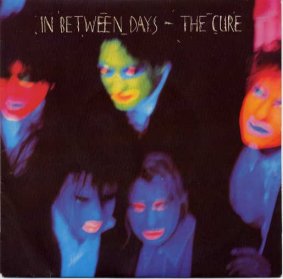
We all know about soulmates, people who are perfectly on one's wavelength in a way that no-one else can be, who just have that special place and connection, whether friend or spouse. I often wonder if a song can be a soulmate because, if it can, mine is 'Inbetween days' by The Cure. No other song in the 4,000 or so on my iPod comes even close to that kind of intimate relationship. Physicists talk of resonances between things or forces, when one can trigger under certain conditions effects and changes in another; there is undoubtedly a spooky resonance between this song, my heart, and my brain.
Call me a philistine (you wouldn't be the first) but I would actually claim that the first second of this song means more to me than the other thousands of hours of music I have at my fingertips: that rumbling tumbling, chaotic yet perfectly controlled avalanche of drums that kicks off and stands majestically alone until, just as a second appears on the song timer, the bass guitar kicks in. That kind of dramatic entrance, unequalled ever, sets a dizzying standard that is luckily almost matched by the stepwise ushering into place, in perfectly timed sequence, of acoustic guitar, cheesy synth, and finally Robert Smith's gloriously morose voice, all sounding more perfect in that three-minute symphony than they ever have for me in any other context (sort of like the way most of the actors in the Lord of the Rings films, on those three magical occasions, simply acted above and beyond anything they had done before, or might ever do again).
I have listened to that song at least once a week for fifteen years and it never fails to stir my spirits, to sound fresh and new and exciting. I have listened to other music, of course, falling as so many of my contemporaries did under the benign influence of Uncut magazine and spending the 1990s and beyond exploring a world of American music I would otherwise never have found. The Cure of the 1980s (very specifically), however, remain top of the heap as my favourite band ever, and have ingrained in me a soft spot for large bands of serious men, in dark suits worn casually, making superficially gloomy music shot through with wit and eccentricity (prime examples are Nick Cave and the Bad Seeds, Tindersticks and, erm, Reservoir Dogs).
‘Inbetween days’ was released in 1985, which makes it 23 years old, which occasionally beings me close to a vertigo-like state of amazement at a generation gap which has opened up, like an earthquake tearing a gash in a road. Let’s, just for a moment, use 1985 as a fulcrum around which to pivot time, a tipping point in pop music’s admittedly short but occasionally glorious history. Pivot one way by 23 years and we land in 1962, not just the past but 7 years before I was born, in other words, when real time began. Years like 1962 just don’t even register on my musical radar – what the hell was anyone listening to? Doing a little archeological excavation on the Internet suggests that this was the year Bob Dylan released his first album, Elvis was balancing movies and music, and the year’s top songs were by Bobby Vinton, Ray Charles, Chubby Checker, Acker Bilk and the Four Seasons. That is old music, old old old, just incomprehensibly far back, to a 39-year-old as much as a 16-year-old. This terrifying sensation of a gaping generation chasm is even more dizzying when I wonder if the 16 year-olds of today view 1985 as being that far back, and might think that The Cure could have been sampling pounding dinosaur feet to catch that magical drum sound.
Even now, with my theoretically greater maturity, my iPod hasn't stretched back that far, and my sole dalliances with the 1960s remain early Leonard Cohen and frequent unsuccessful attempts to see what the point is about Bob Dylan. It really troubles me to contemplate that, to today's teenagers, my song could seem that old, that much of a whole different world, era, separated across an unbridgeable chasm of time from today. To me it is timeless, ageless, deathless, and will never get so old that I felt like it could die.
Jumping back to the present on our 23-year pivot, during the inbetween years, as I have implied, my relationship with the Cure was never monogamous, and as time goes on, I have flirted with other songs and artists thinking they might be a serious prospect for my soul, but it has never been serious. However, quite recently, one band has finally come close and may yet have it in them to produce a piece of music that could threaten the supremacy of ‘Inbetween days’. That band is The National, and last year's Boxer contained some moments of pure beauty, again led by astonishing drum performances; the passage around a minute into Fake Empire when Bryan Davendorf announces his presence by slowly cranking up as the piano takes a breather is simply astonishing and, lacking the proper terminology to explain technically what they are called, the drum patterns in Apartment Story just don’t sound like anything else I have ever heard. Drums have bridged the gap for me, and The National are battling for control of my musical soul; hopefully, peaceful cohabitation will be the solution.
Interestingly, one other common feature bridges the gap from Cure to National, and that is fantastic videos, from giant fluorescent socks chasing the band while a drunken camera swinging from a rope captures the action for Inbetween Days, to the National gradually winning over an indifferent wedding crowd in a beautifully shot piece for Apartment Story.
The circle is closed, the bridge is strong, but can the bridge bear another giant arching span backwards too to 1962 and finally swallow up the other generation gap? We will just have to see.
The author of this blog (AK) lives in Cork, Ireland, and works in higher education. He downloads more music than he has time to listen to, has around 10,000 songs on his PC, and always has a queue of DVDs he can't find time to watch; TV is consumed mostly through DVD box set catch-ups, and The West Wing is his absolute benchmark of perfection. He has a worrying gadget obsession, and in August 2010 he traded in his Nokia N95 and retired his 32-gB iPod Touch, for an iPhone 4.0, and has never looked back. He still clings to his Blackberry and Dell D430 laptop, though. Games-wise, his family have a Wii, several DSs and a PSP, but he has never found anything to match the visceral experience of first-person shooters on the PC, his all-time favourite probably being Half-Life 2. He may technically be a kidult. A general urge to share some random thoughts on all of the above, or just to write them down, led him to start this Blog. Please feel free to leave comments, or e-mail him at theculturecollection@gmail.com. He is also on Myspace at
http://www.myspace.com/theculturecollection.
 Return to the New West (Part 2)
 es shoved where one doesn't normally shove ice cubes, as his friend tried desperately to revive him. In a great twist to the tale which you could hardly make up, his corpse was later stolen by his manager (as agreed with Parsons - what were they on when they came up with that plan?) and burned shortly after under a soon to be famous Joshua tree in the desert(Wikipedia article on Parsons is here while a homepage about him is here). Yes, that is a Joshua tree behind U2 there on the left; perhaps the reason they look so serious is that they can't find the actual spot where Parsons was burned but are sure they can smell something.